
Out-of-Home (OOH) advertising has always been a medium built on boldness. From iconic roadside billboards to immersive city centre takeovers, OOH has always succeeded through the power of simplicity, scale, and unforgettable creative ideas. Simplicity and impact of traditional formats will always have a core role in OOH, but digitalisation has resulted in a transformation both for infrastructure and creative possibilities. Creativity is no longer confined to static formats or singular messages. Instead, it is increasingly enhanced by data, technology, contextual intelligence, and real-time adaptability.
We have entered a new era of Creative Intelligence, where imagination and intelligence work together to create more dynamic, relevant, and effective storytelling in the physical world.
At its core, Creative Intelligence is not about replacing creativity with technology. It is about elevating creativity through technology. It is about using data, automation, AI, and contextual signals to make ideas more responsive, more resonant, and ultimately more impactful.
And importantly, the evidence shows this matters.
Research from Posterscope’s Moment of Truth study demonstrated that context directly drives relevancy and relevancy drives consideration. When consumers viewed relevant creative at relevant moments, brain response increased by +32%, significantly improving both brand and performance metrics. The implication is powerful: audiences respond more positively when advertising feels connected to the environment and moment they are experiencing.
This is where OOH holds a unique advantage. Unlike many digital channels, OOH exists within the real world. It occupies the same spaces as consumers, sharing their environment, movement, mood, and context in real time. Technology is now allowing brands to harness that contextual power in increasingly intelligent ways.
From Static Messaging to Dynamic Storytelling
Traditionally, OOH campaigns were designed as fixed creative executions: one message, repeated consistently across multiple locations. That model delivered scale and memorability, but digital transformation has fundamentally expanded what the medium can do.
Today’s digital OOH infrastructure allows campaigns to adapt dynamically based on a range of contextual signals including time of day, weather, traffic conditions, live events, audience movement, and cultural moments.
This means creative is no longer static. It becomes fluid.
A coffee brand can promote iced drinks during periods of high temperature and switch to hot beverages as temperatures fall. A retailer can surface different products depending on local store inventory. A travel company can respond to traffic delays or transport updates in real time. Sports sponsorship campaigns can dynamically update scores, moments, or celebratory messaging as events unfold live.
The result is storytelling that feels timely and responsive rather than interruptive.
Importantly, this evolution does not diminish the role of big creative ideas. In fact, it demands stronger ideas than ever. The best intelligent campaigns are built around creative concepts flexible enough to adapt across multiple moments while still retaining a coherent brand narrative.
Creative Intelligence is therefore not about technology leading creativity; it is about creativity designed to work intelligently with technology.
Context Is the Creative Multiplier
Context has always mattered in advertising, but OOH is uniquely positioned to capitalise on it because the medium exists physically within consumers’ everyday lives.
What technology now enables is precision.
The Moment of Truth research reinforced that contextual relevance significantly amplifies effectiveness. When creative aligned with the surrounding environment or audience mindset, neurological engagement increased substantially. This translated into improved consideration, stronger emotional response, and greater campaign effectiveness overall.
Why? Because relevant messaging reduces cognitive friction. Audiences instinctively pay more attention to communications that feel immediately useful, timely, or connected to their current experience.
In an increasingly saturated media landscape, attention is one of the most valuable commodities a brand can earn.
This is further supported by research from Ebiquity and Lumen Research, which found a remarkable 98% correlation between greater attention and incremental profit per 1,000 impressions. In other words, attention is not simply a media metric; it is directly linked to commercial performance.
OOH’s ability to command attention has long been one of its defining strengths. But Creative Intelligence allows that attention to become more meaningful by ensuring the message is not only seen, but contextually resonant.
The physical environment itself becomes part of the storytelling.
A great example of this came from Ocean Labs in Denmark for chocolate milk brand Cocio and its strapline Good Mood Moments.
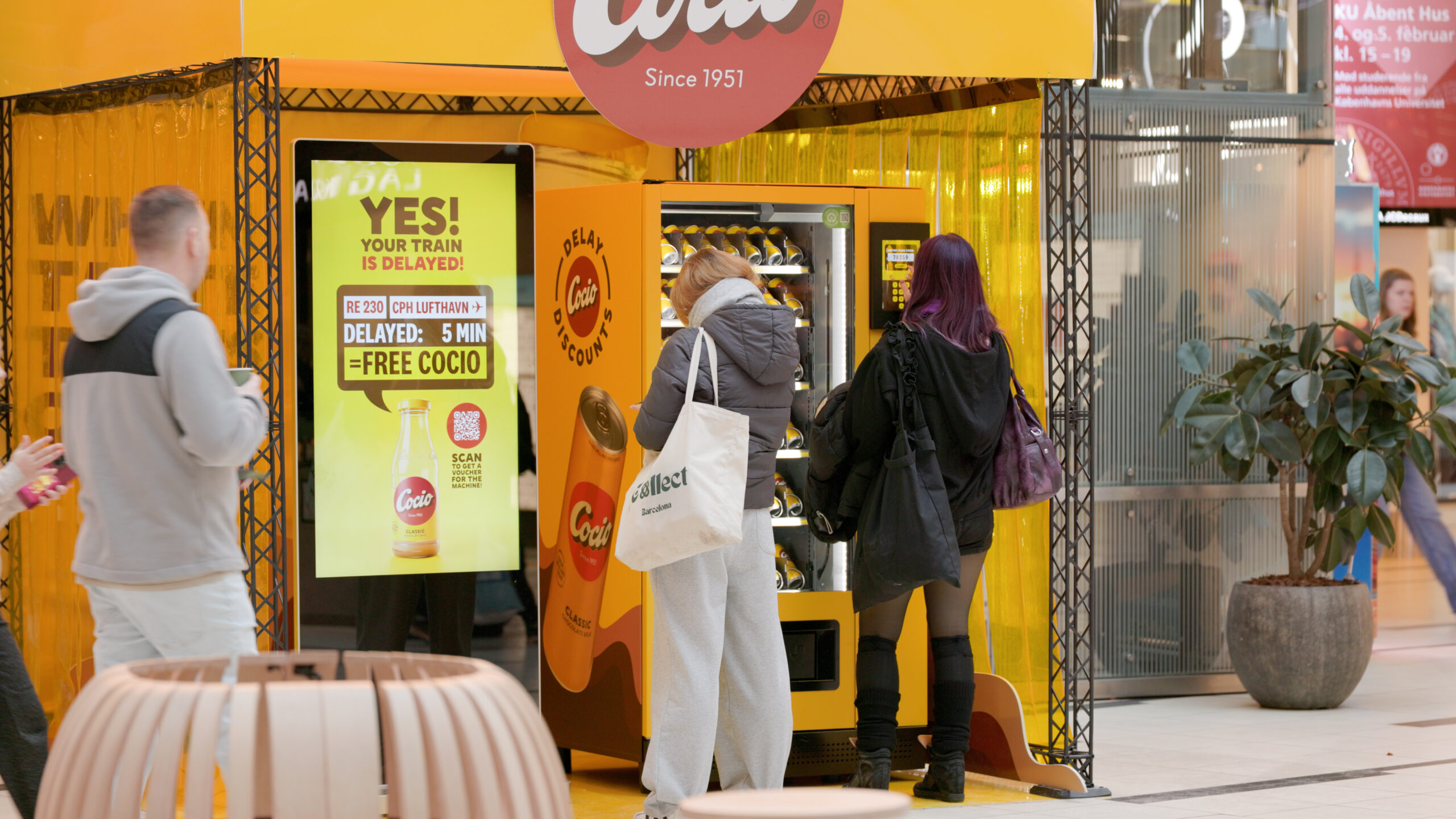
The campaign transformed an everyday commuter frustration into an unexpected brand interaction. Ocean connected dynamic vending machines directly to digital screens in train stations. Whenever trains were delayed, the screens automatically revealed QR codes that unlocked a free sample of Cocio from the connected vending machine nearby.
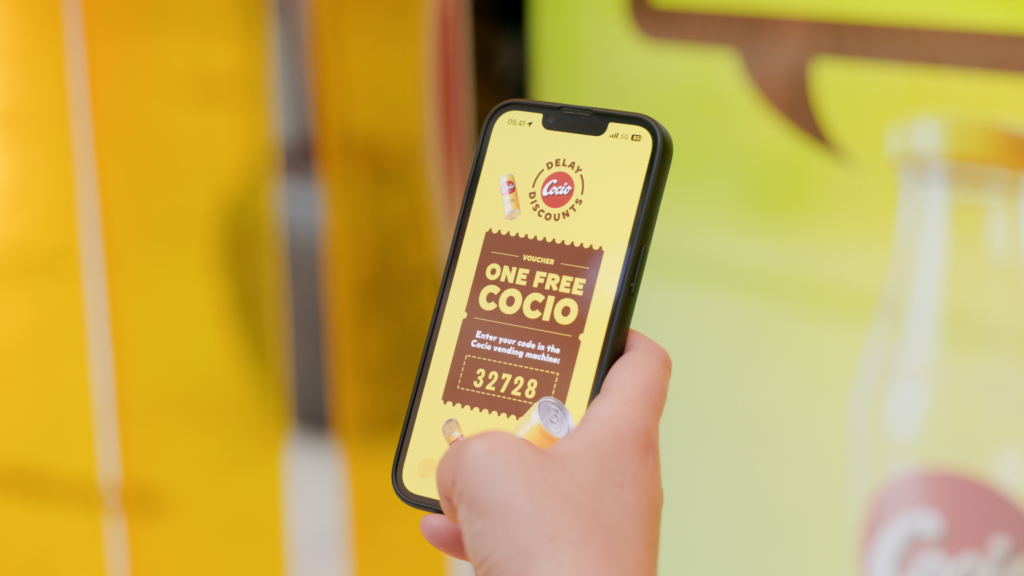
The campaign used live transport data as a contextual trigger, but the real power came from the emotional intelligence of the idea. Rather than simply acknowledging commuter frustration, the campaign responded with something genuinely useful and uplifting, surprising and delighting audiences in the moment. Importantly, it moved beyond awareness alone, physically placing product samples into consumers’ hands at exactly the right time.
The campaign became more than just smart digital execution; it became a memorable real-world experience. And because the interaction felt authentic and emotionally resonant, it quickly extended beyond the station environment itself, generating significant online attention and viral social sharing.
Another example came from Ocean Labs in Sweden for Yabie, a Swedish POS system, with a campaign called Last Call. Designed to help local bakeries reduce food waste while maximising profits, the campaign dynamically connected live stock data with nearby digital screens. One hour before closing, screens in proximity to participating bakeries automatically displayed dynamic discounts on products that would otherwise be thrown away.
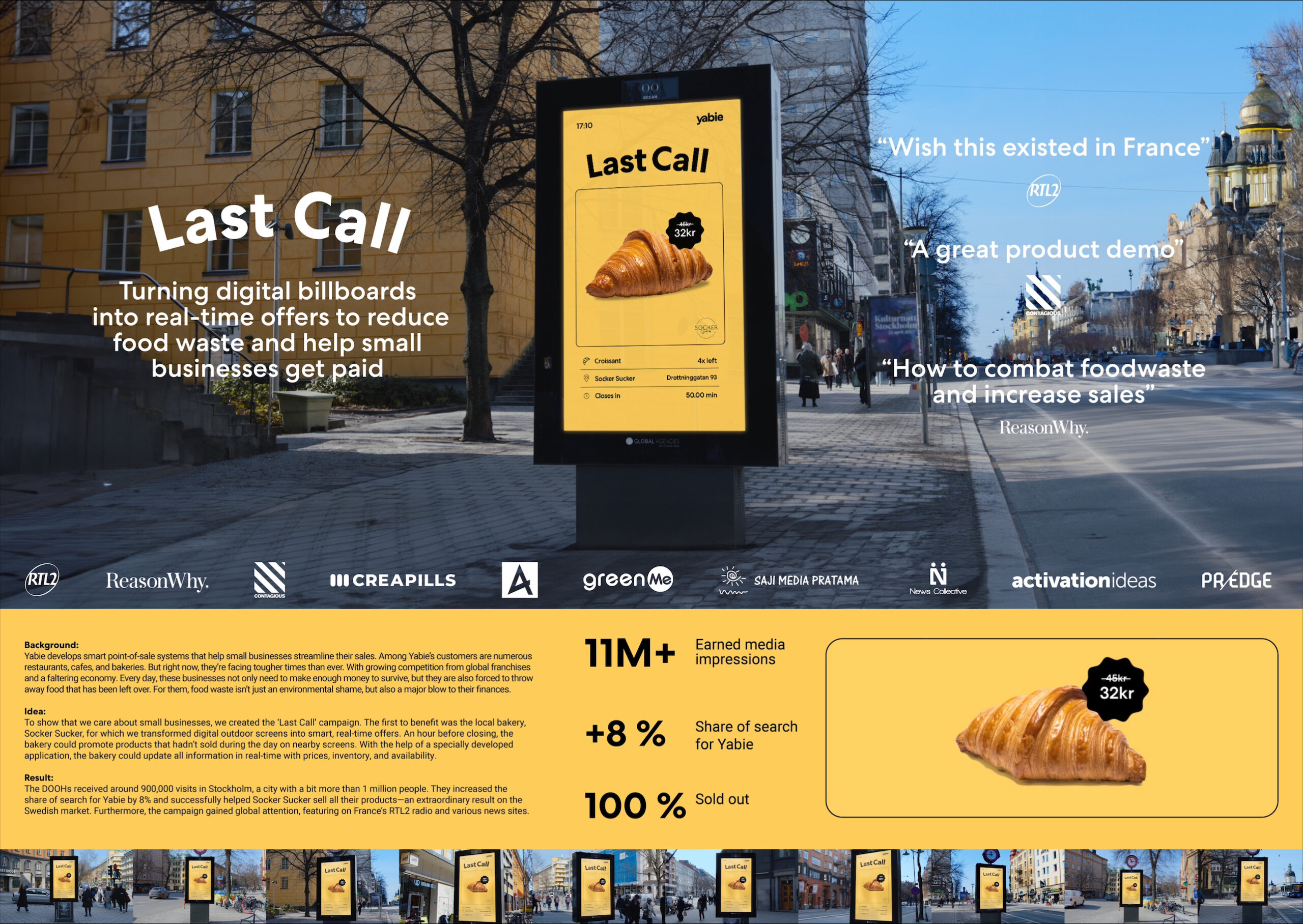
The campaign demonstrated how intelligent DOOH can do far more than broadcast messages. By combining location, timing, live inventory data, and contextual relevance, the campaign created immediate value for both businesses and consumers. It also highlighted how Creative Intelligence can support broader behavioural and sustainability goals, turning media into a utility rather than simply a communication channel.
Both campaigns perfectly demonstrate how Creative Intelligence works best when technology serves human insight.
The Rise of Adaptive Creativity
Creative Intelligence is also changing how creative work is developed.
Campaign assets are often treated as finished outputs, fully designed before launch and then distributed consistently throughout the campaign lifecycle. However today, creative behaves as an adaptive system rather than a fixed asset.
Creative teams are designing modular content frameworks, dynamic templates, and rule-based systems capable of responding to live inputs and contextual triggers.
This represents a significant mindset shift.
Instead of producing a single execution, brands are building creative ecosystems capable of evolving continuously. Campaigns can adapt messaging, imagery, copy, animation, or calls-to-action depending on location, audience behaviour, environmental conditions, or performance signals.
This approach requires closer collaboration between creatives, strategists, technologists, media planners, and data specialists. The strongest campaigns are increasingly conceived with contextual logic and technological flexibility embedded from the outset.
Technology is no longer something added after the creative idea has been developed. It becomes part of the creative thinking itself.
AI and the Future of Creative Effectiveness
Artificial intelligence is also beginning to play a transformative role in the creative process, not by replacing human creativity, but by helping optimise and enhance it.
At Ocean Studios, AI is already being used to pre-test and optimise content for creative effectiveness before campaigns go live. Using AI-powered analysis, brands can assess how creative is likely to perform in terms of visibility, attention, engagement, readability, and overall impact within the OOH environment.
This is particularly important in a medium where consumers often engage with messaging while moving, commuting, or multitasking. Even subtle adjustments to layout, copy length, motion design, or visual hierarchy can significantly influence campaign effectiveness.
AI-driven testing allows creative teams to make smarter decisions earlier in the process, improving outcomes without compromising creative ambition.
Importantly, this is not about removing intuition or originality from creativity. Human insight remains the foundation of great storytelling. Rather, AI acts as an intelligent layer that helps maximise the effectiveness of creative ideas once they enter the real world.
As these technologies evolve, we are likely to see even greater integration between generative AI, audience modelling, contextual intelligence, and real-time content orchestration. Campaigns may eventually adapt not only to environmental conditions, but to predictive audience behaviours and evolving patterns of attention.
But regardless of how sophisticated the technology becomes, the fundamental principle remains unchanged: technology amplifies creativity best when it serves a compelling idea.
Measuring Creativity More Intelligently
One of the most significant evolutions in modern OOH is the growing ability to measure and understand campaign performance in more sophisticated ways.
Traditionally, OOH has been valued primarily for its scale, fame-building power, and long-term brand effects. While those strengths remain essential, new technologies are enabling more granular insight into how campaigns perform.
Advertisers can now access richer audience data, movement analytics, dwell metrics, attention measurement, and behavioural outcomes. This creates a more accountable ecosystem where brands can better understand which creative executions, contexts, and moments are delivering the strongest impact.
Crucially, these insights create a feedback loop for creativity itself.
Creative optimisation, long standard practice in digital channels, is now becoming increasingly relevant in OOH. Campaigns can evolve mid-flight, adapting toward the executions that generate stronger attention or engagement signals.
This does not reduce creativity to data points. Instead, it creates opportunities for creative refinement and continuous improvement.
The combination of intelligent measurement and intelligent creativity is helping OOH become not only a more effective storytelling medium, but also a more measurable and accountable one.
The Future of OOH Storytelling
As Creative Intelligence continues to evolve, the future of OOH storytelling looks increasingly immersive, responsive, and human-centred.
We can expect greater integration between physical and digital experiences, more sophisticated contextual triggers, enhanced AI-driven optimisation, and increasingly personalised creative ecosystems delivered at scale.
Yet amid all this innovation, one thing remains constant: the enduring power of human creativity.
Technology can optimise delivery. Data can identify patterns. AI can enhance effectiveness. But none of these replace the emotional resonance of a great idea.
The most successful OOH campaigns of the future will be those that combine imaginative storytelling with intelligent execution, campaigns that understand not just where audiences are, but how they feel, what they need, and what will genuinely capture their attention in that moment.
Creative Intelligence is ultimately about making advertising more relevant, more responsive, and more meaningful.
It is about using technology not to overwhelm audiences, but to better connect with them.
And for OOH, that represents an extraordinary opportunity
References
Ebiquity and Lumen Research (2024) Maximising Profit Through Attention: New Insights for Media Leaders - https://ebiquity.com/research/maximising-profit-through-attention-new-insights-for-media-leaders/
Posterscope, JCDecaux UK, and Clear Channel (2023) The Moments of Truth. https://www.posterscope.com/what-we-think/ooh-is-the-contextual-medium