
Out-of-Home (OOH) advertising has always been one of the most powerful mass-reach media channels. Its strength lies in its physical presence, unavoidable visibility, and ability to embed brands into everyday environments. But as the industry matures, effectiveness is no longer measured by reach alone. Increasingly, value is defined by how and where media shows up — and what it leaves behind.
Township OOH sits at the centre of this shift. It is one of the few media environments where scale, relevance, and social impact can coexist naturally. When planned and executed correctly, township wall media delivers not only high engagement, but meaningful participation at community level.
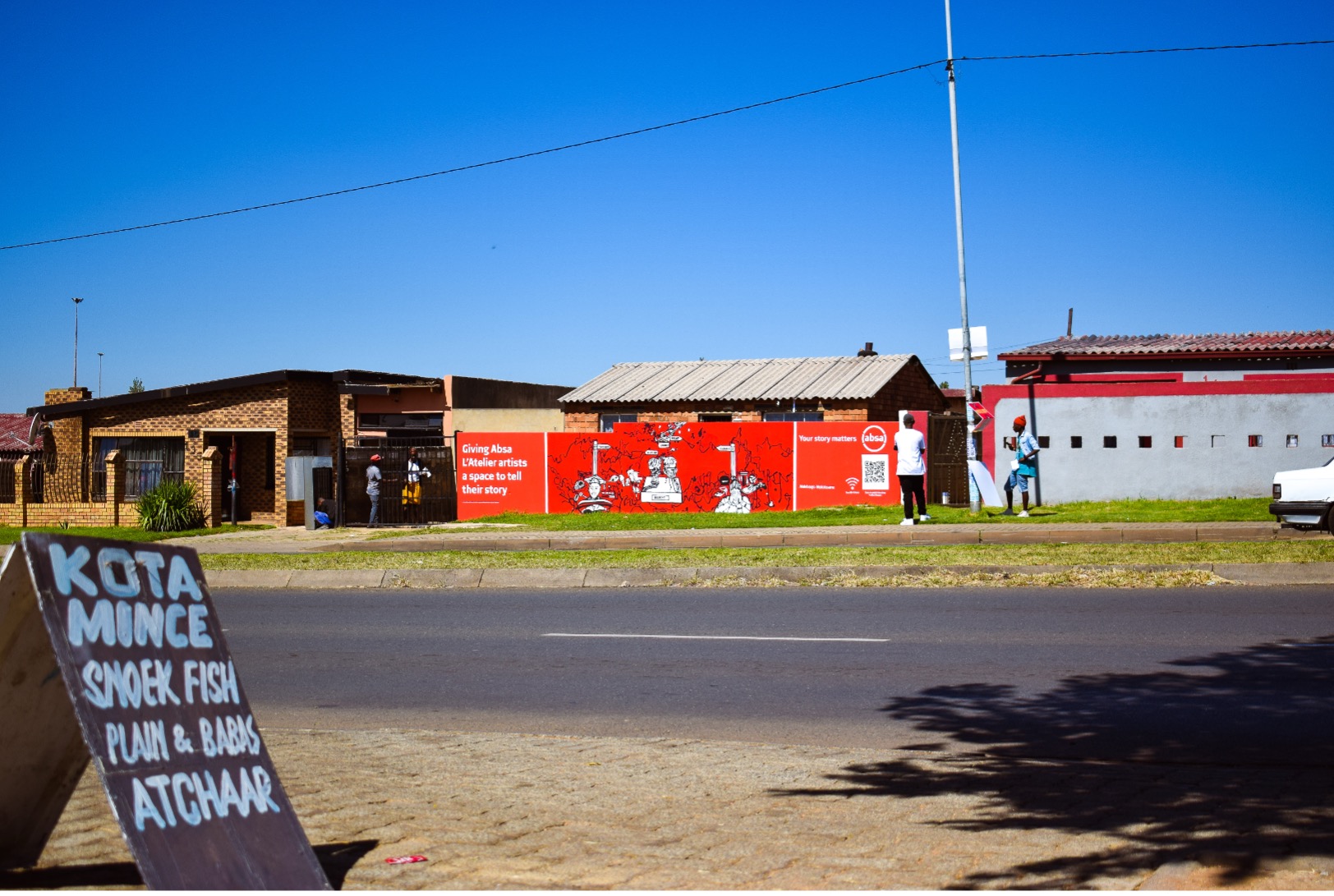
The Absa L’Atelier AR wall mural campaign, executed by Owakhe Media, is a strong example of how purpose-led placement and simple technology can elevate township OOH from exposure to experience.
Extending the L’Atelier Platform Beyond Traditional Spaces
The Absa L’Atelier competition is widely recognised as a leading platform for emerging South African artists. Historically, the competition has lived within gallery and institutional art spaces, which by nature limit access to a broader audience.
For this campaign, Absa’s objective was to extend the L’Atelier platform into public spaces — allowing art to exist within everyday environments rather than behind formal walls. Township streets, with their high foot traffic, dwell time, and cultural relevance, offered a natural extension of this thinking.
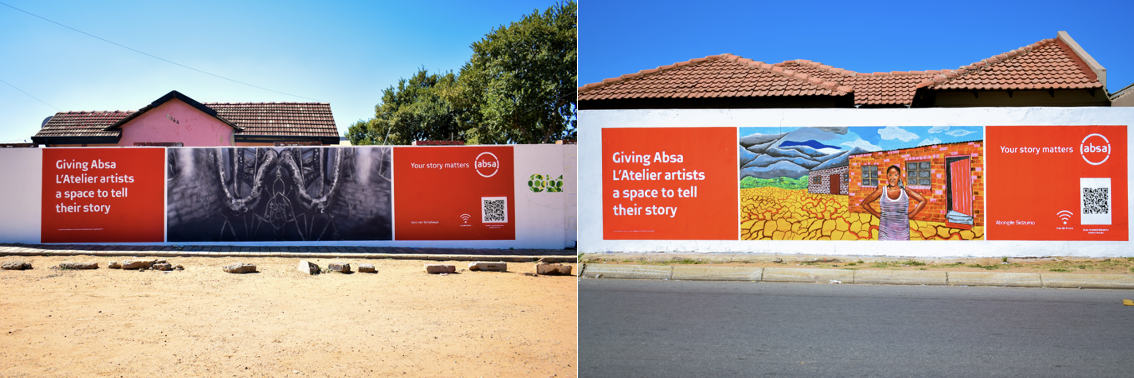
Large-scale wall murals featuring selected L’Atelier artworks allowed the campaign to reach audiences at scale, while maintaining cultural credibility and contextual relevance.
Each mural featured a QR code that enabled an AR video experience when scanned. The content was specific to the artwork displayed on that wall and provided additional context through short-form video storytelling.
This approach allowed static wall media to function as a gateway to deeper engagement, without overcomplicating the user journey.
AR as an Enhancement, not a Distraction
Technology in OOH is most effective when it serves a clear purpose. In this case, AR was not positioned as a headline feature, but as a supporting layer that enhanced the artwork.
Engagement was optional and intuitive. Audiences could choose to interact further, while the core impact of the mural remained intact for passers-by. This balance ensured that the technology added value rather than novelty.
By keeping the mechanic simple and accessible, the campaign demonstrated how digital layers can be integrated into traditional OOH formats without undermining their strength.
Social Impact Built into the Media Model
Township wall media inherently enables community participation. In this campaign, impact was not treated as a secondary outcome — it was embedded in the execution.
Homeowners received income for hosting murals on their properties. Local painters and installers were employed to execute the artwork. The murals themselves became semi-permanent additions to the urban landscape, often generating community pride and conversation. Because wall murals are long-life formats, the benefits extended beyond the campaign period, reinforcing the sustainability of the medium.
What This Signals for the OOH Industry
The Absa L’Atelier AR wall mural campaign highlights a broader shift within OOH. The future of the medium is not defined by technology alone, but by how intelligently it is applied within context.
Purpose-led OOH does not require complex mechanics or large-scale spectacle. It requires thoughtful placement, respect for environment, and execution models that work for communities as much as they work for brands.
OOH will always be about visibility. But its long-term relevance lies in value — economic, cultural, and social.
At Owakhe Media, this philosophy underpins how we approach township wall media: every placement should deliver reach, relevance, and impact — not in isolation, but together.